

Board Discusses Funding for Remaining Warm, Safe, Dry Work
At its September 15 meeting, the Board of Education discussed how to complete the remaining Warm, Safe, Dry facilities projects at Batavia’s schools. The discussion included continued use of reserves and operating funds, as well as possible Health/Life Safety bonds.
No bonds were authorized. The Board is considering how to fund and schedule the work while weighing the effects on taxpayers and school finances.
How We Got Here
Following the unsuccessful 2022 and 2023 facilities referenda, the Board adopted the Warm, Safe, Dry plan in December 2023. It focused on maintaining existing schools rather than pursuing the larger renovation and rebuilding proposals presented in the referenda. Projects included roofs, heating and ventilation, fire alarms, secure entrances, parking lots, doors, and windows.
The original estimated cost was $48.1 million. A subsequent required 10-year Health/Life Safety review identified additional needs and refined the scope of work.
Approximately $26.5 million in building and site improvements has been completed or substantially completed using existing funds, including reserves and transfers from operating funds. Improvements include renovations at H.C. Storm and Louise White, secure entrances, and separate bus and family access at H.C. Storm.
The completed total includes WSD projects and other capital improvements, while the remaining work includes needs identified through the Health/Life Safety review. These differences in scope mean the remaining estimate cannot be calculated simply by subtracting completed work from the original plan.
What Work Remains?
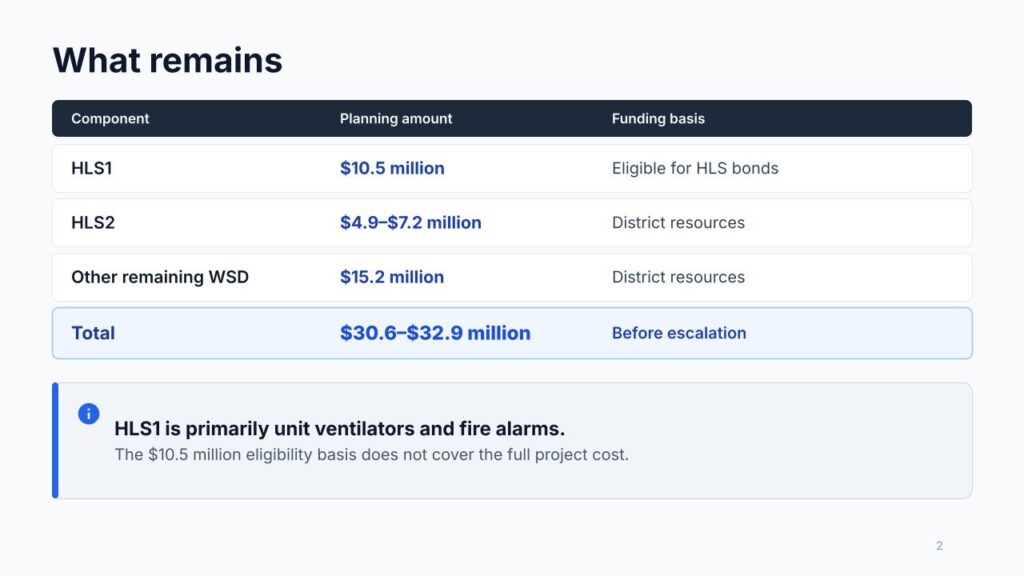
Remaining WSD and Health/Life Safety work is estimated at $30.6 million to $32.9 million. These planning estimates largely reflect 2023 prices; completing the work will require accounting for construction cost increases since then and through the construction period.
Near-term priorities include aging heating and ventilation equipment and fire alarm replacements. Many unit ventilators are more than 30 years old, and some fire alarm systems are obsolete. Planning replacements helps reduce the risk of equipment failures, emergency repairs, and disruptions to school operations.
Roof, window, door, and other building-system needs also remain across our schools. Spreading projects over more years spreads out spending, but extends reliance on aging equipment and exposes future work to construction cost increases.
How Could the Work Be Funded?
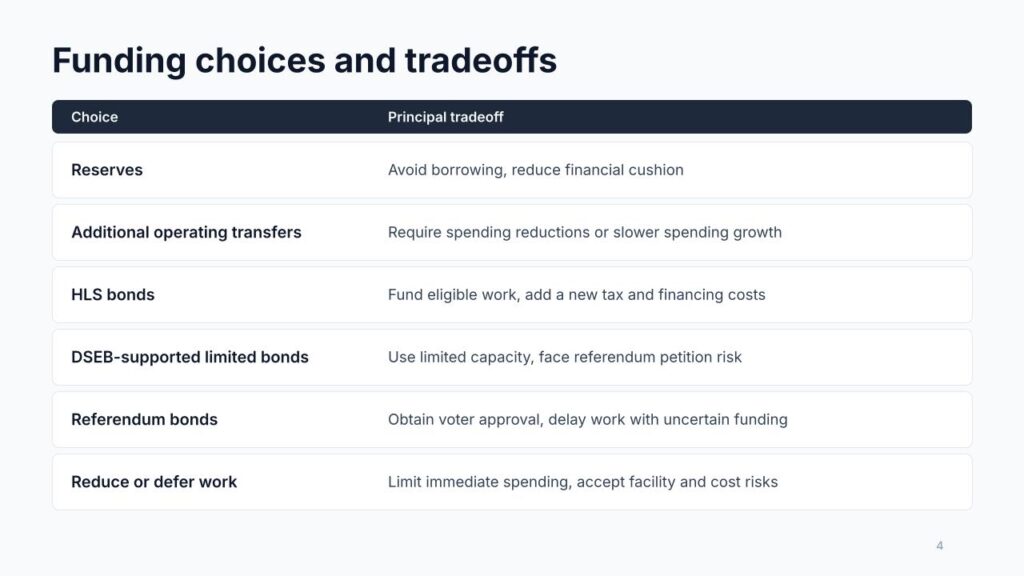
The Board discussed several funding sources, each with different consequences.
Reserves. Using available reserves pays for work without borrowing, but reduces the financial cushion available for emergencies and cash flow throughout the year. The Board has established a minimum fund balance target of 25%.
Operating funds. Transfers from operating funds allow construction to be paid for with existing revenue. Increasing those transfers leaves less available for school operations, including staffing, programs, supplies, and services.
Health/Life Safety bonds. Approximately $10.5 million of the remaining work is currently eligible for this financing. Bonds would spread the cost of qualifying projects over time, preserving reserves and operating funds while adding interest costs and a new property tax levy.
HLS bonds would fund only part of the remaining work. Other projects and costs beyond the eligible amount would still need funding. For example, a more comprehensive or durable heating and ventilation replacement may cost more than the portion eligible for HLS financing.
What Would Bonds Mean for Taxpayers?
HLS bonds would be repaid through property taxes. The annual household impact would depend on the amount borrowed, interest rates, repayment schedule, and taxable property values.
Further financing analysis will address the estimated annual tax impact, repayment period, and total borrowing cost. Comparing the tax outlook with and without new borrowing will help residents understand the effect of a new levy, including how it relates to the end of previous bond payments.
Completing the work without new bonds would require greater reliance on reserves and operating funds, a longer construction schedule, or a combination of those approaches.
What Happens Next?
Administration will develop more detailed financing options for Board consideration, including proposed projects and schedules, estimated taxpayer costs, and effects on reserves and operating funds.
Residents will have opportunities to ask questions and share their views before the Board makes a decision. Further updates will explain the options and how to provide input.
The Board will consider that input alongside building needs, financial projections, and its responsibility to maintain schools and manage public funds.